Six of the continent’s most famous artists you need to know.
Frida Kahlo
She is probably the most famous and recognizable female artist in the world today. Although the first memorial museum — the Blue House in her native Mexico City — opened in 1955, just a few years after her death, her name for nearly half a century remained a matter of national rather than global interest, as did her art filled with Mexican folklore.

Her rise to the art Olympus began in the new century, when in 2000, a documentary about her appeared in the series Great Women Artists. Soon after, a world tour of her drawings, paintings, and personal belongings began. Thus, the world learned of her tragic life story and her vivid, pain-soaked surrealist canvases (as André Breton himself defined them). The retrospective revealed not only her creative path but also her turbulent, restless life: each exhibition was filled with artifacts that told of her difficult childhood, hospital stories — consequences of illness and a severe accident — and, of course, her passionate and tumultuous love affair with Diego Rivera, her mentor and husband. But the numbers speak most eloquently: while in 2016 Kahlo’s auction record was $8 mln, in 2021 her Diego and I sold at Sotheby’s for $34.9 mln.
Diego Rivera
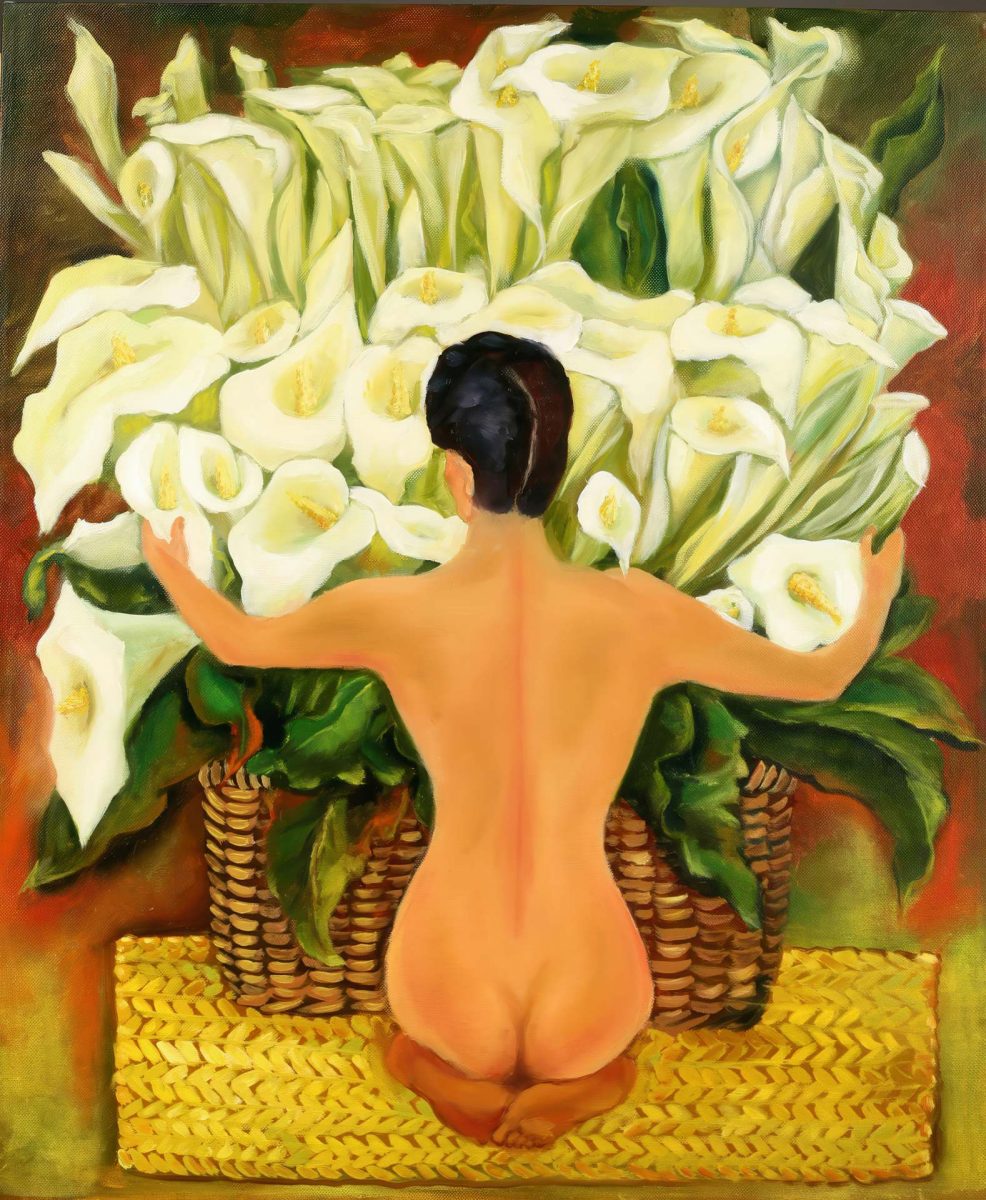
By the time he married 22-year-old Frida Kahlo, Rivera was already a well-established 43-year-old artist and, in her own words, the man who “blessed her to pursue art.” He had studied at the National School of Fine Arts in Mexico City, lived in Paris (where he befriended Picasso and other avant-garde artists and had a daughter with Russian painter Marevna), and developed his own avant-garde style rooted in Cubism and national identity. He became a founder of Mexico’s school of monumental painting, which flourished after the local revolution, decorated dozens of public buildings, and gained hundreds of students and followers. He also became a staunch communist and visited the USSR for the 10th anniversary of the Revolution. By the 1930s, he was celebrated even in the United States: despite his leftist ideas, he created murals in several major cities, and his retrospective at the newly opened Museum of Modern Art (MoMA) in New York brought him worldwide fame. Today, his works are housed in major museums across the globe.
Tarsila do Amaral
Tarsila do Amaral is one of the main stars of 20th-century Latin American art. She is often called “the founder of Brazilian modernism,” which, in all its forms — from painting and design to architecture and literature — remains influential today: it is honored at the Venice Biennale and celebrated in major museums from the Centre Pompidou in Paris to the National Museum of Modern Art in Tokyo. Occasional discoveries of her forgotten paintings in old Brazilian mansions excite the art world as much as the rediscovery of a Caravaggio or Rubens.

Like many artists of the early 20th century, she sought her artistic identity in Paris. She studied at the famous Académie Julian, learned Cubist techniques from Fernand Léger and other masters. But she longed to live only in her homeland. Upon returning to Brazil, she spent years searching for her own style while traveling across the country — and she finally found it in an innovative blend of European avant-garde principles and Brazilian folk sensuality.
Fernando Botero
In a recent interior design magazine, Hollywood star of Colombian origin Sofía Vergara spoke about a large Botero painting, Matador, adorning her Los Angeles living room: “I saw it as a child at an exhibition in Bogotá and fell in love! And I recently bought it at auction.” This is just one of hundreds of stories about the journeys of the artist’s paintings and sculptures around the world. Today, his works can be found in Sydney, Paris, London, Beijing — and even in Moscow and St. Petersburg, where his monumental bronze sculptures with their instantly recognizable exaggerated forms are displayed in both the Pushkin Museum and the Hermitage.

Botero himself, like his art, can be called a “citizen of the world” — he lived, studied, and worked for long periods in Medellín and Bogotá, Madrid and Paris, Florence and New York. Yet he always called himself “the most Colombian artist in the world.” And that statement rings true: the complexity and conceptual depth of his themes — beloved by collectors, curators, and the general public alike — are always expressed through simple, naive forms and cozy, corpulent figures that became his unmistakable signature.
Alfredo Jaar
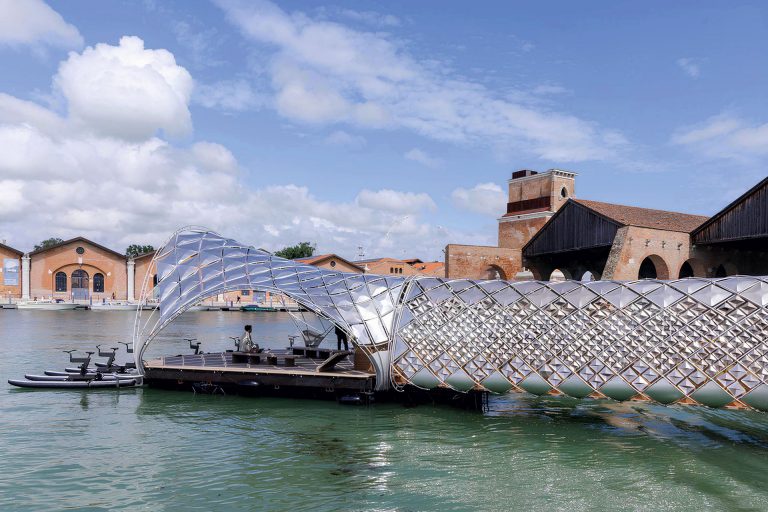
In 1981, 25-year-old architect and artist Alfredo Jaar left Chile amid the height of Pinochet’s military dictatorship. It seemed he had left for good. But, as it turned out, his lifelong artistic mission to confront global injustices would eventually lead him back — returning as a hero to a very different country. In 2013, he represented Chile in the national pavilion at the Venice Biennale with one of the event’s most memorable installations: a giant mechanical model of Venice slowly being flooded by water. With this work, he drew attention to global warming and the threat of submerging one of the world’s most beautiful cities.

Jaar has become renowned as an unrelenting researcher and one of the most uncompromising, persuasive, and innovative contemporary artists. Each of his projects begins with the identification and study of a critical issue, and culminates in a powerful, visually striking artwork that brings it to public awareness. For this, he is valued not only by museum curators but also by city governments around the world — frequently invited to address urban problems through artistic means, from revitalizing disadvantaged neighborhoods to creating memorials.
Vik Muniz
Brazilian provocateur and political activist, artist and photographer Vik Muniz is a regular participant in major international exhibitions, including the Venice, São Paulo, Sharjah, and Sydney Biennales. He became famous for his so-called photographic appropriations, which he began creating at the turn of the 21st century: using found garbage, he reconstructed famous paintings by both Old Masters and modern artists, then photographed them on film to achieve a painterly effect. For example, his Botticelli-style Venuses emerged from shards of broken dishes, his Caravaggio Medusa from pasta and red sauce, and his life-sized Vatican frescoes from assorted trash collected at Rio de Janeiro’s largest landfill. The true material of these visual “puzzles” can only be discerned when viewed up close. These optical illusions became a global sensation, touring museums worldwide; in 2007, they were shown in Moscow at the Photo Biennale in the Manege. Today, the artist has returned to his roots as a sculptor — creating small-scale replicas of old private houses and abandoned shacks, inviting reflection on the theme of memory.

Photo: Vostock Photo