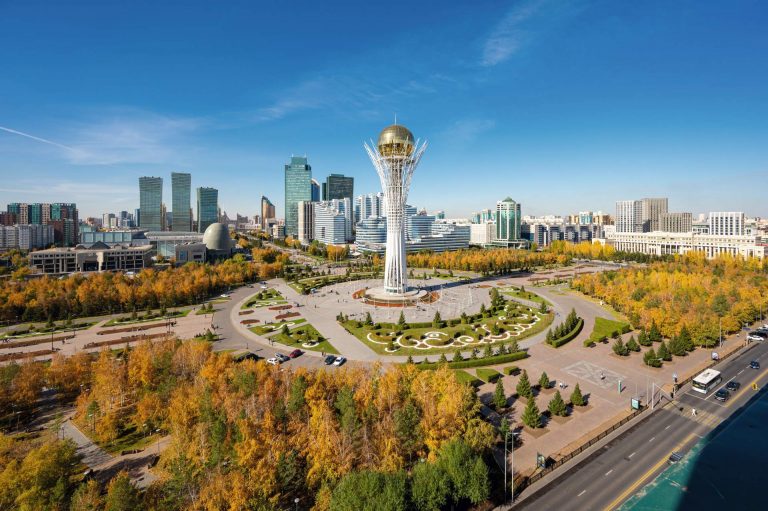
Heading to Shandong Province to discover unexpected perspectives of China.
Sunset at a château among vineyards. A yacht marina that has witnessed the world’s finest sailing regattas. Ancient monasteries and cathedrals… Are we talking about the French Riviera? Majorca? Sardinia? No. About Shandong Province in eastern China. It is not yet as familiar to travelers as Beijing, Shanghai, or the tropical island of Hainan. All the more fascinating and surprising!
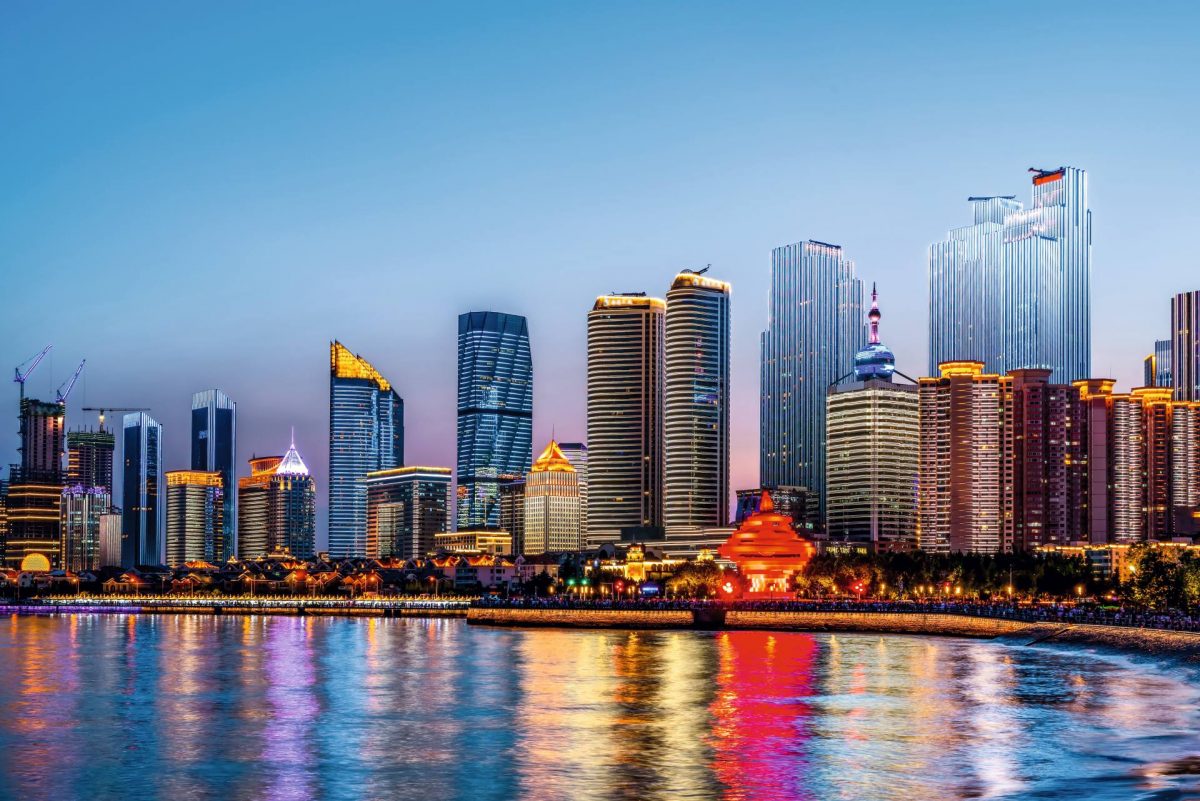
The sailing capital of the country
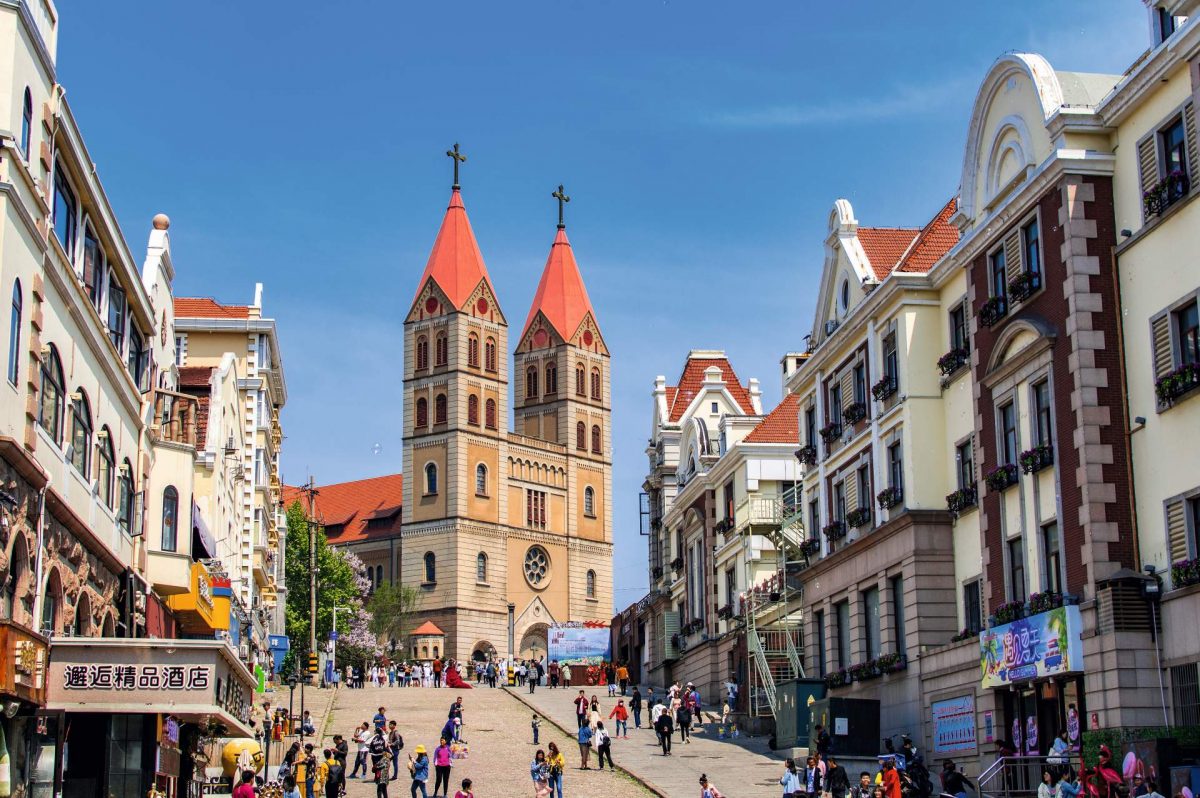
In Qingdao, the province’s largest city (though its capital is Jinan), comes the first break of expectations. The main attraction of this metropolis of over 9 million people, along with the Zhanqiao Bridge stretching into the Yellow Sea (not really a bridge but a pier built in 1892, just a year after the city’s founding), is St. Michael’s Catholic Cathedral. A symbol of the German chapter in Qingdao’s history. Germany received the strategic seaport as a concession in the late 19th century and controlled it until World War I. Many buildings were erected then in the historic Shinan district, where one can almost feel like being in Munich. The cathedral was built in the 1930s, and services are still held there today.
Qingdao’s yacht marina carries a Mediterranean vibe. In 2008, during the Beijing Olympics, the world’s best sailors competed here. Several times, yachts from the prestigious round-the-world Volvo Ocean Race (now The Ocean Race) docked in Qingdao. Fast catamarans of the global sailing tournament Extreme Sailing Series skimmed across the smooth waters of Jiaozhou Bay. Qingdao proudly — and deservedly — bears the title of China’s sailing capital.
West vs East
Do the Chinese appreciate these constant associations with Europe? Apparently, yes. Otherwise, they wouldn’t be building hotels in Penglai, on the shores of the Yellow Sea, in the style of European royal palaces. Nor would they style their wineries as French châteaux.
Shandong Province, especially around the city of Yantai, is China’s premier wine region: a Chinese Bordeaux, Tuscany, Napa Valley, and Krasnodar Territory rolled into one.
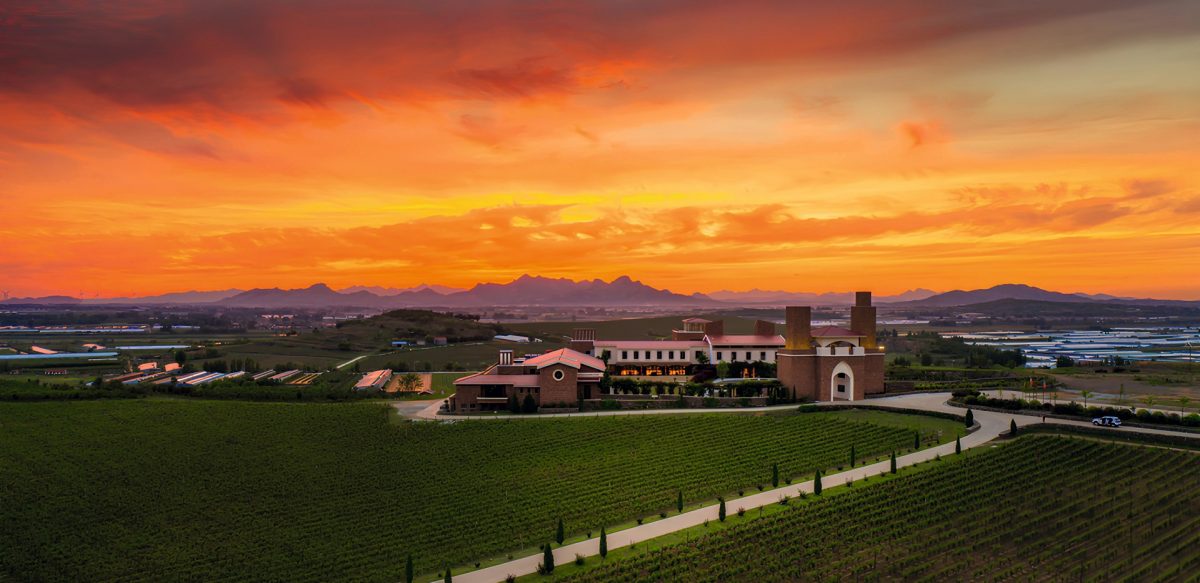
In the Qiu Shan Valley, the Rothschilds built their Long Dai estate. And here one can notice movement in the opposite direction as well. The West quotes the East — in its own interpretation. Forty hectares of terraces where Cabernet Sauvignon and Marselan grapes grow. Right there, “sunk” into the slopes, are elegant, minimalist buildings with hieroglyphs on the walls, wooden ceilings, and columns reminiscent of Daoist temples.
At one of the wineries in the same valley near Mount Qiu, Professor Pascal Durand, former dean of the Burgundy University School of Winemaking, oversees vines, harvests, and fermentation. Travelers are invited to stay in a hotel with panoramic views of the vineyards. It is no surprise that the World Wine Tourism Organization has chosen Yantai as the host of its global summit in 2025.
The Eight Immortals
Chinese emperors once came to the northeastern tip of the Shandong Peninsula — where Penglai, Yantai’s resort district, now lies — in search of eternal youth. For it was from here, legend says, that the Eight Immortals — revered Daoist saints — set off on their sea voyage. Before departure, each immortal bestowed their supernatural power upon the ship. But perhaps some drops of it remained on shore?

From Penglai’s waterfront, a monumental sculpture gazes out to sea, depicting the immortals’ departure. Another striking attraction is the vast Sanxianshan complex of temples and parks, built in modern times. Here, Buddhism and Daoism coexist with traditional Chinese architecture, calligraphy, and landscape design arts from different regions of the country. Inside the Jade Buddha Temple lies a massive statue weighing 108 tons. In the river, against the backdrop of red pagodas, white and black swans glide while visitors row boats. And suddenly, artificial mist descends, turning everything around into the scenery of a Chinese fairy-tale film.
Sacred mountains
From stage scenery — to historic places. Mount Laoshan, 30 km from Qingdao, is considered one of the birthplaces of Daoism. Today, it is a national park, where, among green slopes and waterfalls, stands the Temple of Supreme Purity from the Ming dynasty, surrounded by blooming camellias and peonies, with statues of emperors, warriors, and deities of heaven, earth, water, and lightning. It is also called the Lower Temple. There is also the Upper one — the 14th-century Temple of Great Purity.
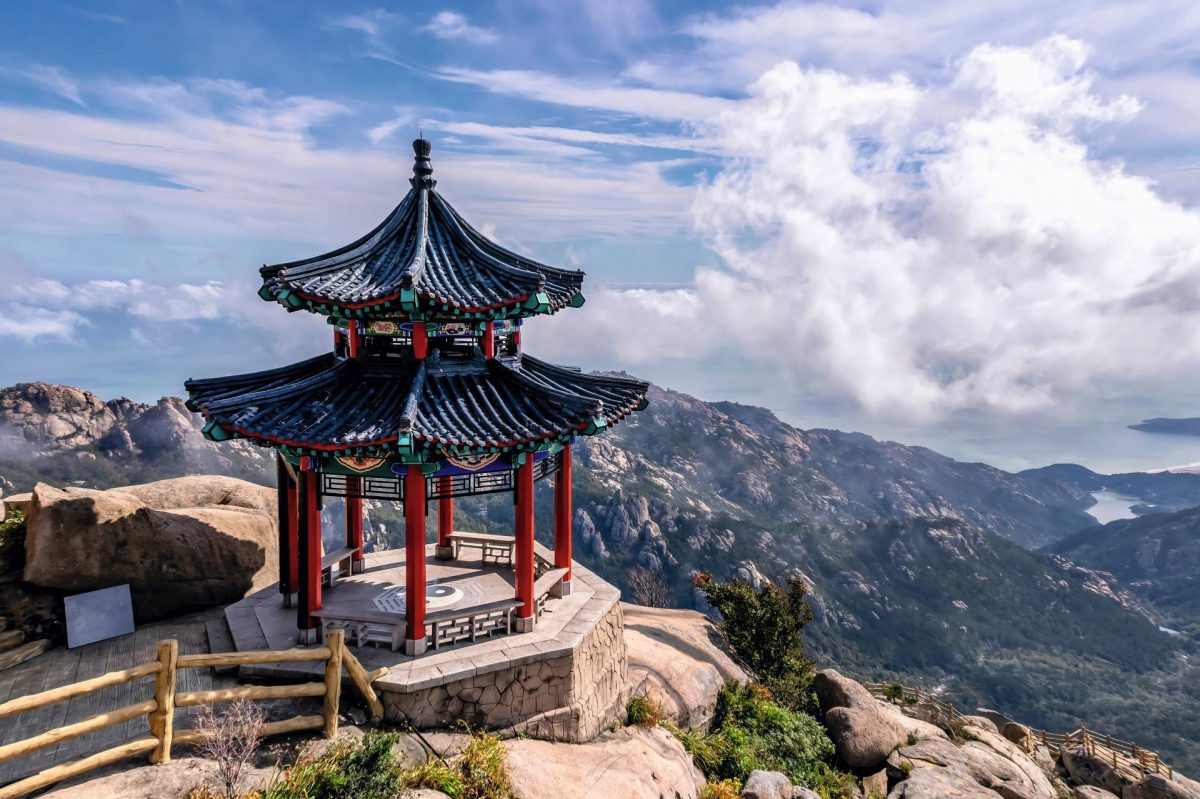
If you have the time and desire to travel inland from the coast to Jinan and Tai’an (about 350 km from Qingdao), you can visit Mount Taishan, sacred to Daoists and a UNESCO World Heritage site.
Legends tell of the mountain spirit ruling the realm of the dead, of saints and immortals. Emperors of various eras and dynasties built palaces and defensive walls here, holding ceremonies and rituals. At the summit, rulers addressed Heaven to thank it for power, and at the foot they thanked Earth for the harvest.
At the mountain’s peak — the 1,545 m Jade Emperor Summit — stands a temple. For centuries, pilgrims climbed there on foot, with 7,200 steps carved into the rock. Now it’s simpler: one only has to queue for the cable car cabins. For the strong in spirit and body, a hike upward is still possible — about two hours up the steps. The reward is a breathtaking view and the foremost of the 22 temples now standing on Mount Taishan — the Temple of the Mountain Deity with its magnificent Palace of Heavenly Blessings, built in 1008. A mural on the temple wall tells of how the mountain deity descended to the human world on an inspection. One wonders what the results of such an inspection would be today.
Photo: Shutterstock.com, en.chateau9peaks.com